


From September 21,2026, to October 18,2026, regulatory authorities, including the NMPA and the CDE, jointly issued the following guiding principles:
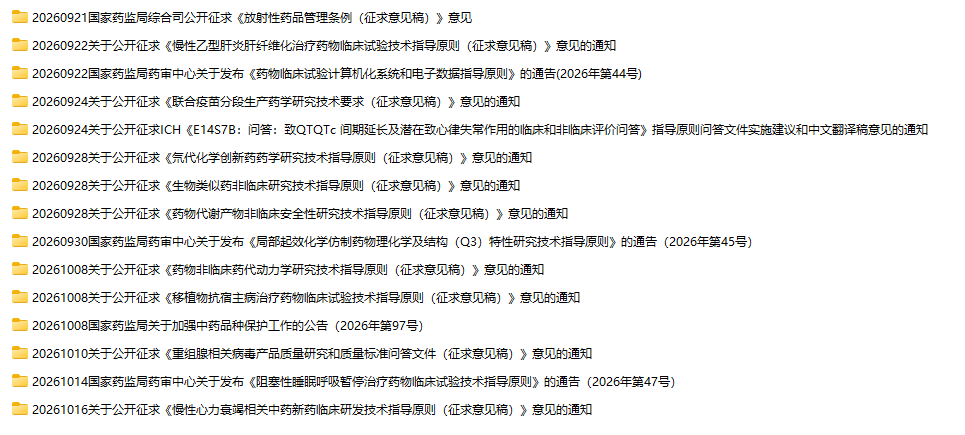
This regulatory monthly report will focus on the following key areas:
I. Notice on Soliciting Public Comments Regarding the "Technical Guidelines for Clinical Trials of Drugs for the Treatment of Liver Fibrosis in Chronic Hepatitis B (Draft for Comment)" dated September 22,2026
The scope of application of this draft for public comment is limited to anti-fibrotic drugs, and specifically applies to drug development for both chemical drugs and therapeutic biological products.
From an overall perspective, the key considerations for the trial design are elaborated in two aspects: the target population and the efficacy evaluation.
1. Target population: Patients with liver fibrosis caused by CHB; the "gold standard" for diagnosing liver fibrosis is liver biopsy, and liver histopathology serves as the diagnostic and primary endpoint evaluation criterion for participants in confirmatory clinical trials.
2. Efficacy evaluation: This includes clinical outcome assessment, hepatic histopathological
evaluation, imaging assessment, and hematological assessment—each with its own strengths and limitations. The exploration of non-invasive biomarkers as methods for evaluating the efficacy of therapies for liver fibrosis is encouraged.
Clinical trials are primarily categorized into clinical pharmacological studies, exploratory clinical trials, and confirmatory clinical trials; at each stage of these trials, the characteristics of the drug are respectively validated, thereby advancing drug development in a sequential manner.
1. In clinical pharmacological studies, conducting pharmacodynamic and biomarker explorations during exposure-effect analysis provides a scientific basis for subsequent selection of dosing regimens; for prolonged dosing durations, beyond constraints imposed by drug toxicity or pharmacological effects, the dosing duration in multiple-dose tolerance studies should adequately support the conduct of subsequent clinical trials; for drugs that may undergo hepatic metabolism, distribution, or excretion, studies on the impact of hepatic impairment on drug PK should be initiated as early as possible, thereby providing a foundation for patient eligibility/exclusion criteria, appropriate dosing regimens, and dose adjustments in subsequent clinical trials; for patients concurrently receiving baseline antiviral therapy, particular attention should be paid to potential drug-drug interactions during concomitant use and their clinical implications.
2. In exploratory clinical trials, early-stage concept validation may employ imaging modalities to select trial participants; primary efficacy endpoints may utilize non-invasive biomarkers, including imaging data; the study duration should be determined by the drug's mechanism of action, safety profile, and anticipated effects on the selected efficacy endpoints. In later stages of exploratory trials, a randomized, double-blind, placebo-controlled design is typically adopted, with liver histopathology serving as the primary inclusion criterion and efficacy endpoint, ensuring a minimum study duration of 12 months. During the exploratory clinical trial phase, it is recommended to establish multiple dose groups based on prior PK/PD evaluation results to comprehensively assess the drug's exposure-effect relationship, thereby providing a scientific basis for the selection of subsequent dosing regimens.
3. Confirmatory clinical trials shall employ a randomized, double-blind, placebo-controlled superiority design. Trial participants should generally be selected from patients with significant liver fibrosis and corresponding or higher stages (e.g., stage ≥3 according to the Ishak scoring system). The time window from liver biopsy to trial enrollment should generally not exceed 6 months; individuals with severe liver injury or decompensated cirrhosis shall be excluded. Clinically relevant outcomes are first recommended as the primary efficacy endpoint; alternatively, histopathological improvement in liver fibrosis after at least 12 months of treatment may serve as a surrogate endpoint. A post-marketing study plan shall be established to continue research supporting benefit-risk assessment throughout the drug's entire lifecycle. Suggested secondary efficacy endpoints are also provided.
In principle, the common standards for safety evaluation shall be followed. Sufficient exposure dose and exposure duration are required to conduct safety observations, and liver tissue examination results should be obtained as much as possible.
II. Notice of the Center for Drug Evaluation of the National Medical Products Administration (NMPA) on the Issuance of the "Guiding Principles for Computerized Systems and Electronic Data in Drug Clinical Trials" (No.44 of 2026), dated September 22,2026
Scope of application of these guidelines: These guidelines primarily apply to computerized systems used in clinical trials of drugs, encompassing the generation, collection, storage, transmission, analysis, processing, reporting, and management of clinical electronic data; such systems include, but are not limited to, electronic systems for collecting trial data, systems for randomization and drug allocation, and clinical trial electronic document management systems.
The content of this guidance document comprises three main sections:
1. General considerations: To ensure the reliability of data, it is essential to adhere to the ALCOA++ principles, delineate the respective responsibilities of the sponsor, investigators, and clinical trial sites, and emphasize a risk-based quality management approach;
2. Computerized systems: encompassing application procedures, training, security, validation, system release and fault handling, user management, and timestamp management;
3. Electronic data: covers key aspects such as data collection, audit trails, data review and correction, data transmission, exchange, and migration, data signing, cloud solutions, backup and archiving, etc., to enable full-lifecycle management; electronic data comprises both data and metadata. Metadata provides context for the data, including variable names, units, field values before and after changes, reasons for changes, timestamps, user information, and more.
III. Notice dated 24 September 2026 Concerning the Public Consultation on Implementation Recommendations and Feedback on the Chinese Translation of the ICH Guiding Principle "E14/S7B: Q&A – Clinical and Nonclinical Evaluation Questions and Answers on QT/QTc Interval Prolongation and Potential Arrhythmogenic Effects"
The purpose of this draft for comments is to further facilitate the domestic implementation of the Q&A document of the ICH Guideline "E14/S7B: Q&A – Clinical and Nonclinical Evaluation of QT/QTc Interval Prolongation and Potential Arrhythmogenic Effects."
In 2022, the ICH issued the "Q&A on E14/S7B: Clinical and Nonclinical Evaluation of QT/QTc Interval Prolongation and Arrhythmogenic Potential," and the draft for public comment released by the CDE serves as a supplement and refinement of the ICH E14 (Clinical Evaluation) and ICH S7B (Nonclinical Evaluation) guiding principles. This draft aims to optimize risk assessment strategies for drug-induced arrhythmias—particularly QT interval prolongation—by integrating nonclinical and clinical data.
The Q&A session for ICH E14 focuses on electrocardiogram (ECG) methodologies, gender considerations, positive controls, study design, concentration-response modeling for QT data, special circumstances, and ECG monitoring in later-stage clinical trials; whereas the Q&A session for ICH S7B addresses comprehensive risk assessment, key considerations for best practices in in vitro studies, key considerations for best practices in in vivo QT studies, and principles for constructing arrhythmogenic models, providing detailed responses to each question to facilitate drug development.
IV. Notice on Soliciting Public Comments on the "Technical Guidelines for Clinical Trials of Drugs for the Treatment of Graft-versus-Host Disease (Draft for Comment)" dated October 8, 2026
This guidance applies to the clinical development of drugs for the treatment of graft-versus-host disease, including chemical drugs and therapeutic biologics. It addresses key aspects such as the overall design of drug clinical trials, indication positioning, study populations, and efficacy evaluation, providing specific recommendations for each stage of clinical trials.
In clinical pharmacology studies, research is conducted in four key areas—single/multiple dose escalation studies, drug interaction studies, pharmacokinetic (PK) studies in special populations, and immunogenicity assessments—covering pharmacokinetics (PK) and pharmacodynamics (PD) analyses, as well as dose range exploration, thereby providing guidance for subsequent clinical trials.
Prior to initiating pivotal clinical trials, it is recommended to optimize the dosage and administration regimen of the investigational drug during the exploratory clinical trial phase. The exploratory phase should include dose exploration and investigation of the optimal treatment duration. The efficacy of the investigational drug in patients receiving concomitant immunosuppressive therapy should also be evaluated. If long-term treatment is planned, the number of dose adjustments or drug discontinuations due to adverse reactions should be kept within a limited range, and clear trial termination criteria should be established. For patients who achieve complete remission and subsequently discontinue the investigational drug, the safety and efficacy of re-treatment upon recurrence of graft-versus-host disease (GVHD) may also be explored. The time to treatment response for the new drug should be investigated; if the pre-specified disease remission criteria are not met after an extended treatment period, the clinical trial should be terminated promptly. Disease remission should be used as the primary efficacy endpoint in exploratory trials.
For confirmatory clinical trials, it is recommended to employ a randomized controlled design, with consideration given to either active treatment or a positive control, as well as a superiority or non-inferiority design. At the enrollment stage, it is advisable to stratify participants based on factors potentially associated with disease remission. The key considerations for the trial design are as follows:
1. Indications: There are three distinct indications; it is recommended to conduct separate clinical trials for each indication. Alternatively, pre-specified analyses of different patient cohorts may be performed within a single trial, thereby supporting approval for each respective indication.
2. Study population: It is recommended that inclusion and exclusion criteria be established based on the intended indication, with these criteria being proportionate to the associated risks. Patients who have experienced treatment failure solely due to intolerance to glucocorticoids should be excluded; patients who are glucocorticoid-dependent should not be included. When excluding patients with chronic graft-versus-host disease who exhibit irreversible fibrosis and are expected to have no response to anti-inflammatory agents, appropriate justification should be provided.
3. Treatment regimen: The duration of study drug therapy depends on the mechanism of action of the investigational drug and its anticipated efficacy. For patients who initially achieve remission but subsequently experience relapse of graft-versus-host disease (GVHD), consideration should be given to re-treatment with the investigational drug. It is also advisable to clarify whether GVHD prophylactic therapy should be continued upon initiation of study drug therapy, and whether medications previously used for acute or chronic GVHD should be discontinued or continued.
4. Concomitant therapy: When conducting efficacy assessments, it is recommended to clarify how variations in baseline therapy may influence the evaluation of safety and efficacy outcomes. It is also advisable to establish a tapering regimen for immunosuppressants, including the sequence for gradual dose reduction.
5. Efficacy Evaluation: Primary efficacy endpoints: disease remission, assessed using grading criteria established through consensus in domestic and international clinical practice guidelines; secondary efficacy endpoints: duration of remission, progression-free survival, overall survival, etc.; Efficacy assessment and follow-up timelines: for acute conditions, follow-up should last at least 180 days; for chronic conditions, follow-up should last at least 1 year. For acute conditions, assessments may be conducted weekly during the first 8 weeks, followed by at least once monthly up to day 180 of the study; for chronic conditions, assessments should be performed every 2–3 weeks during the first 6 months, thereafter at least once every 3 months. Study visits should include documentation of events occurring during the interval since the last visit. It is recommended to collect data on such events during intervals between scheduled visits through unplanned visits.
In principle, the common standards for safety assessment shall be followed.
V. Notice of the Center for Drug Evaluation of the National Medical Products Administration (NMPA) on the Issuance of the "Technical Guidelines for Clinical Trials of Drugs for the Treatment of Obstructive Sleep Apnea" (No.47 of 2026), dated October 14,2026
This guidance document was open for public comment in June 2026 and took four months to be implemented.
The 2025 "Guidelines for the Diagnosis and Treatment of Obstructive Sleep Apnea in Adults" have, for the first time, included pharmacotherapy—specifically the glucoside-dependent insulinotropic polypeptide (GIP) receptor and glucagon-like peptide-1 (GLP-1) receptor agonist tirzepatide—for the treatment of patients with moderate-to-severe OSA who also have obesity.
The development of pharmacological treatments for OSA primarily advances along three pathways: weight-loss–based OSA therapies, neuromuscular modulators that directly act on the pharyngeal dilator muscles, and wake-promoting agents designed to alleviate excessive daytime sleepiness (EDS) in OSA patients.
This guiding principle summarizes the key design considerations for Phase III trials of three drugs with distinct mechanisms of action. It elaborates on critical design elements in seven specific areas: study objectives, overall trial design, participant inclusion and exclusion criteria, dosing regimen and dose selection, efficacy endpoints and evaluation methods, safety endpoints and exposure requirements, and positive-control trial design, thereby providing guidance for drug development.
Other considerations:
1. Proof-of-concept (POC) trial: For the development of drugs targeting known mechanisms of action across multiple indications, including OSA, consideration may be given to leveraging data from relevant indications to support the design of Phase III clinical trials for the OSA indication, provided that appropriate conditions are met; however, if Phase II trial results demonstrate unsatisfactory efficacy or safety profiles in the OSA subgroup population, further exploratory studies specifically targeting OSA should be conducted.
2. Application of remote monitoring and wearable technologies: Prior to deployment, communication with the CDE is required; furthermore, quality control measures should be strengthened to ensure the safety, efficacy, and appropriateness of remote monitoring and wearable technology applications.
3. Studies in specific patient populations: Researchers are encouraged to integrate pharmacological mechanisms; for drugs whose mechanisms are appropriate, elderly participants should be included in Phase III clinical trials for subgroup analysis, thereby supporting benefit-risk assessments in the elderly patient population.
4. Drafting of the package insert: Specify the applicable age range for the target population, and ensure that the dosage and administration are appropriate for that age range.
VI. Notice on Soliciting Public Comments Regarding the "Technical Guidelines for Clinical Research and Development of New Traditional Chinese Medicine Drugs for Chronic Heart Failure (Draft for Comment)" dated October 16,2026
This draft for comments primarily applies to new traditional Chinese medicine (TCM) drugs intended for the treatment or prevention of chronic heart failure; decompensated heart failure (DHF) and acute heart failure (AHF) are not covered by this draft. The "Technical Guidelines for Clinical Research on New TCM Drugs for Chronic Heart Failure," issued in December 2017, no longer apply.
The overall research and development of new traditional Chinese medicine (TCM) drugs adheres to the "three-fold integration" principle. This approach emphasizes the role of TCM theory and clinical experience in human use within the development of new TCM drugs, with particular attention to key considerations identified in the compilation of human-use experience data. Clinical trial designs shall be formulated based on TCM theory and clinical experience, encompassing clearly defined staging and classification of chronic heart failure, characteristics of the target patient population, dosing regimens, treatment durations, and efficacy evaluation endpoints. Such designs aim to demonstrate that the trial results can form a complete body of evidence consistent with TCM theory and clinical experience, thereby fully reflecting the clinical value of the new TCM drugs.
Common research directions include addressing the prevention of disease before its onset, alleviating clinical symptoms/signs, improving cardiac function, enhancing quality of life, and reducing the risk of progression to heart failure and/or mortality; researchers may also propose new research objectives based on clinical practice.
In clinical trials, particular attention should be paid to issues such as subject selection, dosing regimens, baseline and concomitant therapies, and efficacy evaluation; accordingly, appropriate recommendations and considerations are provided for each of these areas.
1. Subject selection: Multiple key stratification factors must be considered to ensure the scientific validity and interpretability of the study findings.
2. Dosage regimen: Depending on the study objectives, determine whether an introduction period is required. For subjects currently receiving treatment for their primary disease or chronic heart failure, an introduction period shall be established, typically lasting no less than 2 weeks; the treatment duration shall be appropriately designed, supported by non-clinical safety study data; for loading designs, standardized treatment shall generally be administered in accordance with the latest clinical guidelines; the use of placebo control is encouraged when ethically permissible.
3. Basic and Comorbid Treatment: Accurately document all concomitant medications used, ensuring medication stability and comparability between treatment groups, thereby minimizing the impact of concomitant therapies on the efficacy and safety evaluation of the investigational drug. The reasons for any changes in basic treatment must be recorded. It shall be explicitly stipulated that no additional traditional Chinese medicines or treatment modalities—other than those already documented—shall be introduced if such additions may adversely affect the evaluation of efficacy and safety.
4. Efficacy Evaluation: This section elaborates on the methodologies and tools for evaluating the effects of preventive measures in individuals without disease, the assessment of symptoms/signs, the evaluation of cardiac function, the assessment of quality of life, and the monitoring of progression to heart failure and/or mortality, thereby establishing appropriate efficacy evaluation endpoints.
The diagnosis and assessment of chronic heart failure rely on medical history, physical examination, laboratory tests, cardiac imaging, and functional testing. It is essential to refer to established diagnostic and therapeutic guidelines to further clarify diagnostic criteria and diagnostic algorithms, thereby ensuring the adequacy and accuracy of the diagnosis, and to document relevant supporting evidence.
VII. Other Matters
7.1 Registration Category
On September 21,2026, the General Department of the National Medical Products Administration (NMPA) publicly solicited comments on the "Regulations on the Administration of Radiopharmaceuticals (Draft for Comment)."
Key Points: This draft for comments was formulated through a revision of the *Administrative Measures for Radioactive Drugs* issued and implemented by the State Council of the People's Republic of China in 1989. Consisting of nine chapters and fifty-nine articles, the draft covers the entire lifecycle of radioactive drugs—from research and development, registration, production, and distribution to use—as well as storage and transportation, thereby further refining the regulatory framework governing radioactive drugs.
Announcement of the National Medical Products Administration on Strengthening the Protection of Traditional Chinese Medicine Products (No.97 of 2026), dated October 8, 2026
Key Highlights: This announcement introduces mechanisms for communication and handling of objections; applicants may engage in consultations with the China Traditional Medicine Variety Protection Committee (CTMPC) regarding major issues both prior to submitting a protection application and during the review process of such applications; for traditional Chinese medicine varieties for which protection is denied, applicants who subsequently submit a new protection application shall conduct relevant research addressing the specific grounds of the original denial and provide a point-by-point rebuttal; it is further stipulated that, during the protection period of a traditional Chinese medicine variety, the National Medical Products Administration (NMPA) shall not accept registration applications for drugs bearing the same name and formula; however, registration applications for such drugs that were already accepted prior to the approval of the protection application shall continue to undergo review; if any information on a registration certificate of a protected traditional Chinese medicine variety undergoes changes, the applicant shall submit an application for amendment of the protection certificate within the prescribed time limit, thereby further standardizing the workflow for supplementary applications under the traditional Chinese medicine variety protection regime; additionally, both already-accepted protection applications and previously approved protected varieties shall be publicly disclosed on the official website of the NMPA, ensuring the timeliness of public announcements and their alignment with actual operational practices.
Common Issues Issued by CDE from September 21 to October 18,2026
1. When submitting documents via online appointment submission, under what circumstances is it necessary to provide the same-product verification code or the same-product acceptance number?
In cases where multiple application forms corresponding to multiple verification codes share a single set of documentation, or where multiple acceptance numbers share a single set of documentation—such as when submitting applications for multiple specifications of the same product type via online transmission—users may specify the same verification code or the same acceptance number for the product type; in such cases, the documentation only needs to be transmitted once. If the multiple verification codes or multiple acceptance numbers do not involve sharing a single set of documentation, users must schedule separate online transmission tasks and submit the documentation separately.
2. Given the ongoing advancement of the online submission of application materials, has there been any update to the total size requirement for application materials submitted by applicants via the online submission system?
To enhance the efficiency of submission of regulatory submission documents, the Center for Drug Evaluation has optimized its network transmission system, increasing the maximum allowable file size for submissions from 10 GB to 30 GB. For single registration applications where the total file size of the submission documents is less than 30 GB, applicants may submit their materials via network transmission.
3. For chemical active pharmaceutical ingredients, excipients, and packaging materials for which the registration information has been completed but no corresponding application number has been assigned, how may the applicant submit supporting documents (e.g., supplementary materials, stability data, etc.) via electronic submission during the review process?
To enhance the efficiency of submission of application materials, the Center for Drug Evaluation (CDE) has uniformly assigned application numbers to chemical active pharmaceutical ingredients (APIs), excipients, and packaging materials for which no application number has been assigned, but for which the required information has already been completed; this measure enables the submission of such materials via online channels. Applicants may log in to the "Applicant Portal" to view their application numbers, prepare and submit the required documentation in accordance with electronic submission requirements, and have their validated application materials accepted and registered; materials that fail validation will not proceed to subsequent stages of the review process.
7.2 Pharmacy
Notice on Soliciting Public Comments on the "Technical Requirements for Pharmaceutical Research on Staged Production of Combined Vaccines (Draft for Comment)" dated September 24,2026
Key Points: This draft for comments adheres to general principles, requiring marketing authorization holders to fully assess the various risks associated with segmented manufacturing, determine whether sufficient data support has been obtained, establish a unified quality management system spanning the entire manufacturing process with the manufacturing enterprises, and ensure the effective operation of such systems. In the pharmaceutical domain, technical guidance is systematically provided across seven dimensions: risk assessment, segmented manufacturing design, manufacturing processes, quality studies, stability studies, and change studies. The draft emphasizes using risk assessment to drive research and design throughout the entire manufacturing process, with particular focus on continuous management of relevant manufacturing enterprises, scientifically defined segmented manufacturing milestones, collaborative process validation among participating enterprises, transfer of quality systems and methodologies across multiple sites, storage and transportation of intermediates along with cumulative stability assessments, and the propagation of changes as well as cumulative risk evaluations.
Notice on Soliciting Public Comments on the "Technical Guidelines for Pharmaceutical Research of Deuterated Innovative Drugs (Draft for Comment)" dated September 28,2026
Key Highlights: This draft for comments outlines the fundamental research and development strategies for the pharmaceutical development of deuterated innovative drugs. For active pharmaceutical ingredients (APIs), it details key considerations in pharmaceutical R&D across multiple aspects, including production process research, structural validation, quality research and quality control, and stability studies. For drug formulations, it elaborates on relevant considerations in pharmaceutical R&D—incorporating the specific characteristics of both APIs and formulations—covering formulation and process development, quality research and quality control, and stability studies.
Notice of the Center for Drug Evaluation of the National Medical Products Administration (NMPA) on the Issuance of the "Technical Guidelines for the Study of Physicochemical and Structural (Q3) Characteristics of Topically Acting Chemical Generic Drugs" (No.45 of 2026)
Key Points: This guiding principle primarily applies to chemical generic drugs for topical or transdermal administration—such as ointments, creams, and gels—that exhibit local therapeutic effects. The Q3 characterization studies shall encompass the following aspects: physical properties, phase state, particle structure, crystalline form of the active pharmaceutical ingredient (API), density, pH value, oil-phase matrix, rheological properties, water activity and drying rate, and deformation-related properties. The number of batches and sample sizes selected shall be sufficiently scientifically sound and representative to ensure the accuracy and reliability of the study results. The evaluation criteria shall be rigorously justified to guarantee their scientific validity.
Notice on Soliciting Public Comments on the "Q&A Document on Product Research and Quality Standards for Restructured Adeno-associated Viruses (Draft for Comment)" dated October 10,2026
Key Points: This draft for comments sets forth specific requirements addressing common issues encountered during the progression of rAAV products from clinical trial application to market approval. The relevant issues and technical requirements are categorized into the following three aspects: (1) genomic titer analysis methods, methodological validation, and establishment of standard limits; (2) biological activity indicators, analysis methods, and methodological validation; (3) impurity studies, control strategies, and analysis methods, along with methodological validation.
7.3 Non-clinical
Notice on Soliciting Public Comments on the "Technical Guidelines for Non-Clinical Safety Studies of Drug Metabolites (Draft for Comment)" dated September 28,2026
Key Point: This guidance document applies to small-molecule chemical drugs.
When to conduct studies on metabolites: Prior to initiating human clinical trials, it is generally advisable to evaluate in vitro metabolic data, plasma protein binding rates, and systemic exposure data of the animal species used in repeated-dose toxicity studies—both in animals and in humans; furthermore, in vivo metabolic data for the animal species and humans should be obtained prior to large-scale or long-term clinical trials (typically before Phase III trials).
Decision on whether to conduct non-clinical safety studies on metabolites: Determine whether to conduct such studies based on factors such as the high proportion of drug metabolites, the types of metabolites, and the comparison of exposure levels in humans and animals.
Approaches for non-clinical safety evaluation of metabolites: When it is possible to identify an animal species in which a metabolite can achieve appropriate exposure levels (equivalent to or exceeding human exposure levels), toxicological studies are conducted in that animal species to assess the toxicity of the drug and its metabolites; when such an appropriate animal species cannot be identified, safety evaluation is performed by directly administering the metabolite to animals.
Specific requirements for non-clinical safety studies of metabolites: this section elaborates on the key considerations during clinical trial design, GLP requirements, as well as the study protocol and schedule.
Notice on Soliciting Public Comments on the "Technical Guidelines for Non-Clinical Research of Biosimilars (Draft for Comment)" dated September 28,2026
Key Points: The development and evaluation of biosimilars shall adhere to the following principles: the comparative principle, the stepwise progression principle, and the similarity assessment principle. The similarity assessment of biosimilars shall involve a comprehensive evaluation of the design and results of pharmaceutical, non-clinical, and clinical comparative studies to determine the overall similarity between the candidate drug and the reference drug. The non-clinical study components shall be categorized into general considerations and other considerations:
In general considerations, this document elaborates on non-clinical comparative study strategies for three distinct scenarios in pharmaceutical comparative studies; it also proposes that, when conducting in vivo pharmacodynamic comparative studies, the use of appropriate animal species and/or disease models is recommended. For pharmacokinetic comparative studies, it is recommended to conduct single-dose studies in the relevant animal species, typically employing a single-dose group design. It is generally not recommended to conduct dedicated general and specific toxicology comparative studies solely to demonstrate the similarity between a candidate drug and a reference drug.
Other considerations: Provide recommendations in three areas—immunogenicity, formulation safety, and excipients—to determine whether to conduct non-clinical safety studies.
Notice on Soliciting Public Comments on the "Technical Guidelines for Non-Clinical Pharmacokinetic Studies of Drugs (Draft for Comment)" dated October 8, 2026
Key Highlights: Compared to the 2014 version of the Guiding Principles, the scope of application has been expanded to include biological products, and a new chapter titled "Considerations for Pharmacokinetic Studies of Biological Products" has been added to the appendices. The section on biological analysis is primarily divided into quantitative analysis and method validation, as well as metabolite analysis. The specific requirements for quantitative analysis method validation and sample analysis shall comply with ICH M10; the metabolite analysis section emphasizes the need to pay particular attention to reactive metabolites. The overall framework of the "Study Items" has been revised in accordance with the requirements of the Common Technical Document (CTD) submission dossier, encompassing plasma concentration–time profiles, absorption, distribution, metabolism, excretion, and drug–drug interactions; under the "Distribution" item, the full blood–plasma distribution ratio, placental transport, and milk secretion have been added. The use of appropriate new technologies, new analytical methods, and integrated multi-technology strategies for non-clinical pharmacokinetic studies is encouraged. It is recommended that systematic non-clinical pharmacokinetic studies be conducted to facilitate the scientific extrapolation of study results to humans. The following sections in the appendices have been deleted: "Basic Requirements for Analytical Methods of Biological Samples," "In Vitro Methods for Pharmacokinetic Studies," "Selection of Animal Models," and "Chiral Drugs." Additionally, the section "Use of Radioisotope Labeling Techniques in Non-Clinical Pharmacokinetic Studies" has been revised to "Radioisotope-Labeled Animal Material Balance Studies."
7.4 Others
Drug Marketing Approval Status of the National Medical Products Administration: September 21,2026 – October 18,2026
Key Points:
1. Epodol胺 Hydrochloride Capsules: Developed by Bristol-Myers Squibb Pharma EEIG, this Class 1 innovative drug, marketed under the brand name Zanfu, is indicated for the treatment of adult patients with multiple myeloma who have previously received at least one prior line of therapy (including one proteasome inhibitor and one immunomodulatory agent), in combination with daratumumab and dexamethasone.
2. Purple Flower Lung-Warming and Cough-Relieving Granules: Guangzhou Yuekang Biopharmaceutical Co., Ltd. – a Class 1.1 innovative traditional Chinese medicine (TCM) drug. Indications: A TCM innovative drug derived from medical institution-based TCM preparations, primarily indicated for the treatment of cough associated with wind-cold lingering in the lung syndrome. It possesses the therapeutic effects of warming the lungs and relieving cough.


025-58181716
Share:


